


Periodontitis is a disease that affects the gums and the tissues that hold the teeth in place. In its early stages, it may go virtually unnoticed, but over time it can lead to bleeding gums, gum recession, bad breath, loose teeth, and even tooth loss.
The good news is that, when diagnosed and treated properly, it is possible to control periodontal disease and preserve your teeth for many years.
At SDS Dental Clinic , we take a progressive and personalized approach to periodontal treatment. Not all patients require the same stages of treatment: the treatment will depend on the depth of the periodontal pockets, the degree of inflammation, the loss of supporting structures around the teeth, and each patient’s response to treatment.
Below, we explain the main steps in simple terms.
1. First phase: diagnosis, oral hygiene, and periodontal decontamination
The first step is to determine the exact condition of the gums.
During a periodontal examination, we assess various factors such as bleeding, inflammation, and the depth of the spaces between the teeth and gums, known as periodontal pockets.
To do this, we take measurements around the teeth—a procedure called periodontometry —and record the results on a periodontogram.
During this first session, we also performed a deep periodontal cleaning to minimize the amount of bacterial plaque and tartar buildup.
Depending on the specific case, this phase may include:
- removal of tartar above the gum line;
- cleaning the areas beneath the gums;
- cleaning using the AirFlow system;
- laser-assisted periodontal decontamination;
- cleaning and irrigation of periodontal pockets;
- local application of certain products when clinically indicated.
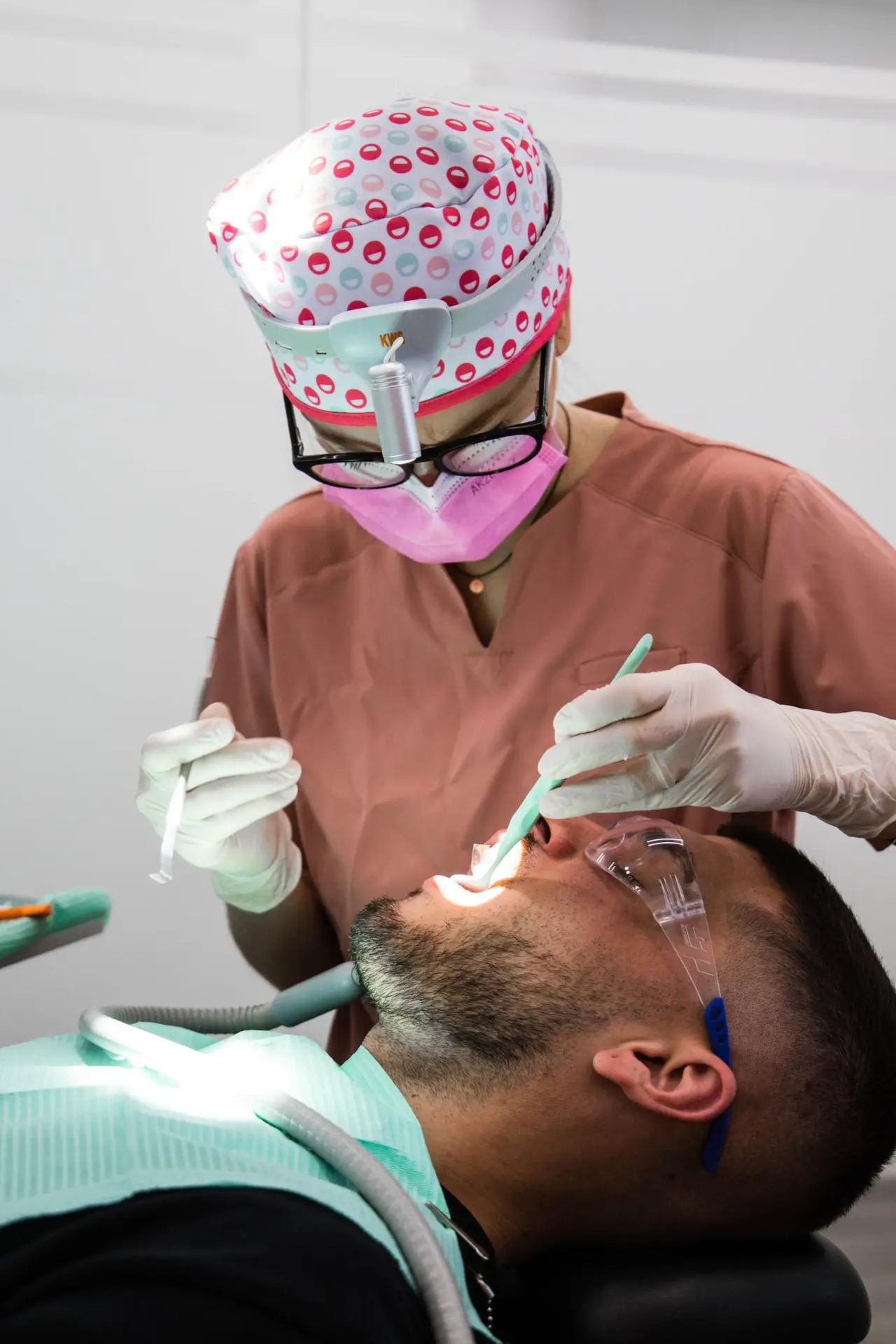
The goal is to reduce the bacterial load and control the initial inflammation of the gums.
If we detect deep periodontal pockets during the examination, it may be necessary to proceed with a more thorough cleaning of the tooth roots.
2. Scaling and root planing: deep cleaning beneath the gums
When there are significant periodontal pockets, conventional oral hygiene is not enough.
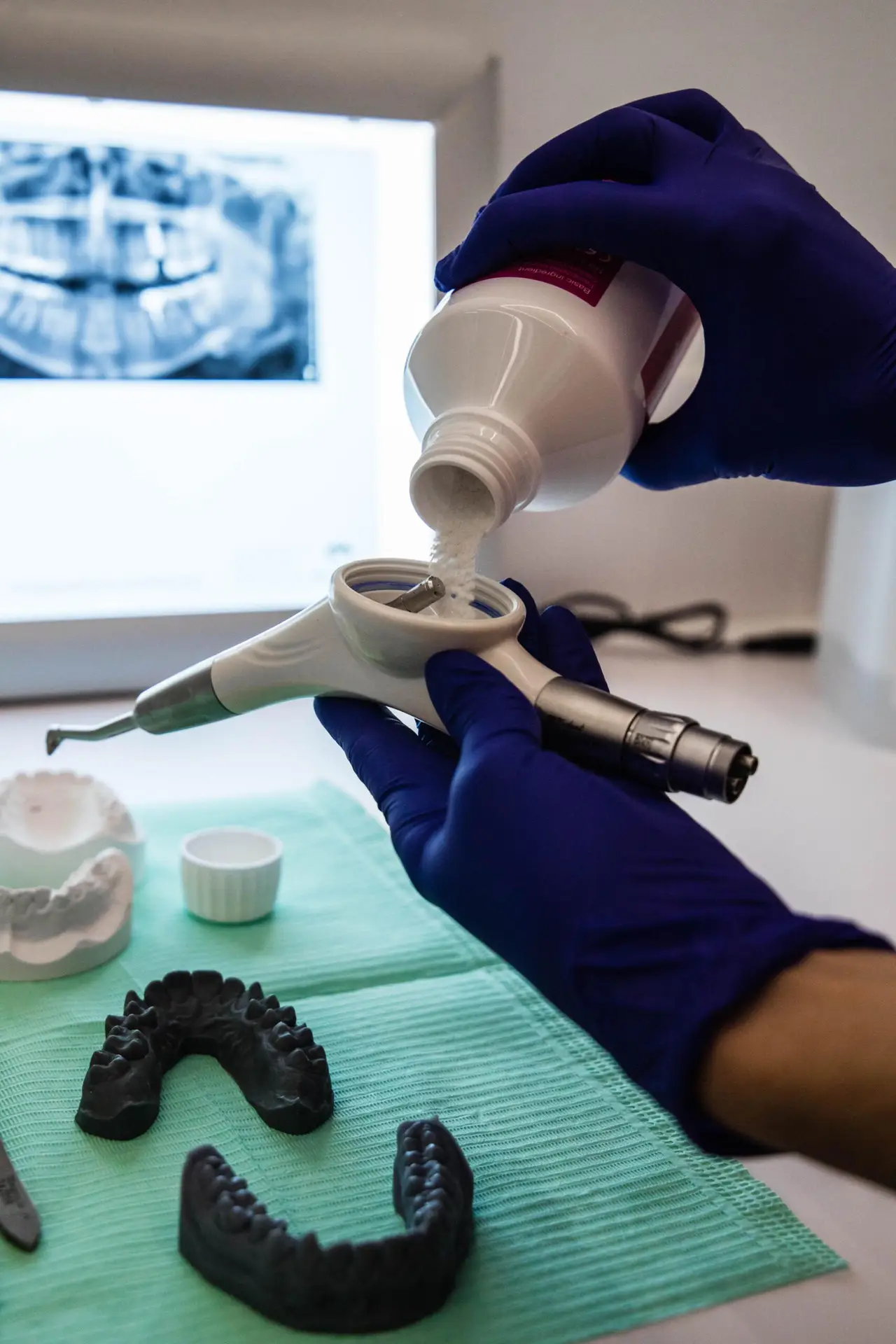
In these cases, we perform scaling and root planing, a procedure many patients refer to as periodontal curettage.
This procedure allows for the thorough cleaning of the tooth root surface located beneath the gumline and the removal of bacterial plaque and tartar that cannot be removed through conventional oral hygiene.
Treatment can be performed on individual teeth or on different areas of the mouth, depending on the extent of periodontal disease.
During this phase, laser-assisted decontamination and other complementary products may also be used when the specialist deems it necessary.
In addition, we review the oral hygiene techniques the patient uses at home, since brushing and flossing are essential for preventing bacteria from building up again.
After treatment, we allow time for healing to see how the gums respond.
3. What happens after a periodontal scaling?
After a deep clean, fabrics need time to recover.
Over the following weeks, the inflammation usually subsides, and in many cases, the depth of the periodontal pockets also decreases.
After about three months, we conduct a new assessment.
We measure the gums again and compare the results with those obtained before starting treatment.
This step is very important because it lets us know which areas have responded correctly and which ones need additional treatment.
4. Periodontal surgery: only when necessary
Most periodontal treatments begin with nonsurgical procedures.
However, some areas with very deep pockets or significant loss of support may not respond fully to scaling and root planing.
In these situations, periodontal surgery may be necessary.
During this procedure, the specialist can directly access the root of the tooth to perform a more thorough cleaning and decontamination.
Depending on the type of periodontal defect present, regenerative techniques may also be used to promote the healing of the tissues surrounding the tooth.
Among the complementary procedures that may be indicated in certain cases are bone regeneration, laser-assisted decontamination, hyaluronic acid, and dental PRP.
It is important to note that not all patients with periodontitis require surgery. This stage is recommended only when there are areas that have not responded sufficiently to initial periodontal treatment.
5. Periodontal Reevaluation
After completing the necessary stages of treatment, we perform another periodontal examination.
During this visit, we verified the following:
- the depth of the periodontal pockets;
- bleeding gums;
- the level of inflammation;
- tooth mobility;
- the progress of the treated areas.
We also compared the new measurements with those taken at the start of treatment.
The goal is to verify that the disease is under control and to identify any areas that may still require attention.
6. Periodontal maintenance: the most important phase in the long term
Controlling periodontitis does not mean that treatment is over for good.
Patients who have had periodontal disease are more likely to develop it again if bacterial plaque begins to build up once more.
For this reason, once the disease has been stabilized, it is essential to begin a periodontal maintenance program.
As a general guideline, checkups can be scheduled approximately every six months, although patients at higher risk may need checkups every three or four months.
During these visits, we examine the gums, check for plaque and bleeding, and perform professional cleaning of the areas that need it.
We also review the oral hygiene techniques the patient uses at home.
Do all patients follow exactly the same steps?
No.
Periodontal treatment must be tailored to each individual.
A patient with early-stage periodontitis may require only periodontal decontamination, scaling, and follow-up visits.
On the other hand, a patient with very deep bags or significant bone loss may require additional procedures.
Therefore, the first step should always be to perform a comprehensive periodontal evaluation.
Can periodontitis be cured?
Periodontal disease can be effectively managed, but maintaining the results depends largely on follow-up care.
Professional treatment removes bacterial plaque from beneath the gums, while proper daily oral hygiene and regular checkups help prevent the disease from progressing again.
That is why, in periodontics, it is not only important to treat the disease—it is also essential to maintain the results over the long term.
Periodontal Treatment in Vilafranca del Penedès
If you notice frequent bleeding of the gums, gum recession, persistent bad breath, or loose teeth, it is recommended that you undergo a periodontal evaluation.
At SDS Dental Clinic in Vilafranca del Penedès, we assess the condition of your gums and develop a periodontal treatment plan tailored to each patient.
Our goal is to control infection, preserve your natural teeth whenever possible, and help you maintain healthy gums over the long term.


