
Today, dental veneers are one of the most popular treatments in cosmetic dentistry. They allow you to transform your smile quickly, naturally, and with minimal invasiveness.
With dental veneers, we can correct:
- stained teeth;
- small gaps between teeth;
- fractures;
- tooth wear;
- irregular shapes;
- minor misalignments.
The two most commonly used options today are composite dental veneers and ceramic veneers. Although both improve the appearance of teeth, there are significant differences in terms of durability, natural appearance, strength, and biocompatibility.
What are composite dental veneers?
Composite veneers are made from aesthetic resins similar to those used in dental fillings. The dentist shapes them directly onto the tooth during the appointment.
This is a faster and more economical option.
Advantages of Composite Veneers
- More affordable price.
- Quick treatment, sometimes in just one session.
- Minimal dental preparation.
- Easy to repair.
However, they also have several significant limitations.
Disadvantages of composite veneers
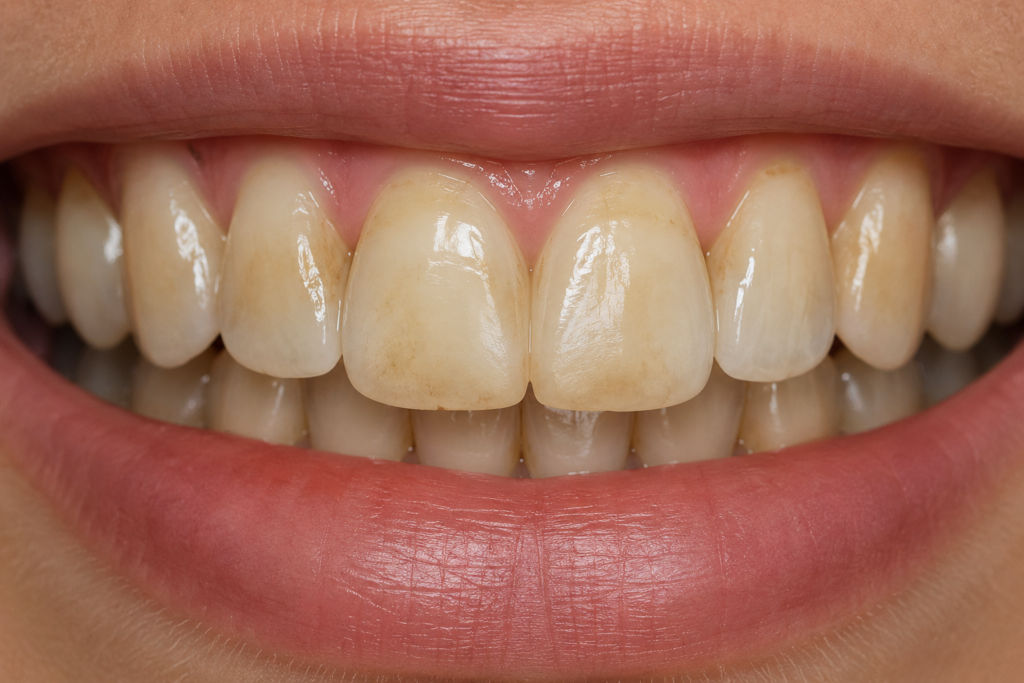
1. They get stained and lose their luster over time
Composite is a more porous material than ceramic and absorbs pigments more easily from:
- coffee;
- wine;
- tea;
- tobacco;
- foods containing food coloring.
Over the years, veneers can lose their luster and look less natural.
2. Lower strength and durability
Composite veneers are more sensitive to:
- fractures;
- wear and tear;
- scratches;
- changes in surface texture.
For this reason, they often require repairs or replacement sooner than ceramic veneers.
3. A less natural-looking result
Although the initial result may look nice, the composite does not reproduce the light and translucency of natural enamel as accurately as ceramic.
The aesthetic difference usually becomes more apparent over time.
4. Lower biocompatibility compared to ceramics
Nowadays, many patients are looking not only for a beautiful smile, but also for materials that are more biocompatible and stable over the long term.
Composite veneers are made from synthetic resins and polymers. Some scientific studies have investigated the release of small amounts of certain monomers and chemical derivatives over time, especially as the material ages or wears down.
Although the amounts detected are very low and there is no conclusive evidence of clinical toxicity in patients, more and more people are opting for materials that are more inert and biocompatible.
In addition, the composite has a more porous surface, which may lead to increased bacterial buildup and some gum irritation in sensitive patients.
Ceramic dental veneers: the premium choice in cosmetic dentistry
Ceramic veneers are custom-made in a dental laboratory using high-quality porcelain.
They are currently considered the most advanced and aesthetically pleasing option for creating a natural, long-lasting smile.
Advantages of Ceramic Veneers
1. Extremely natural appearance
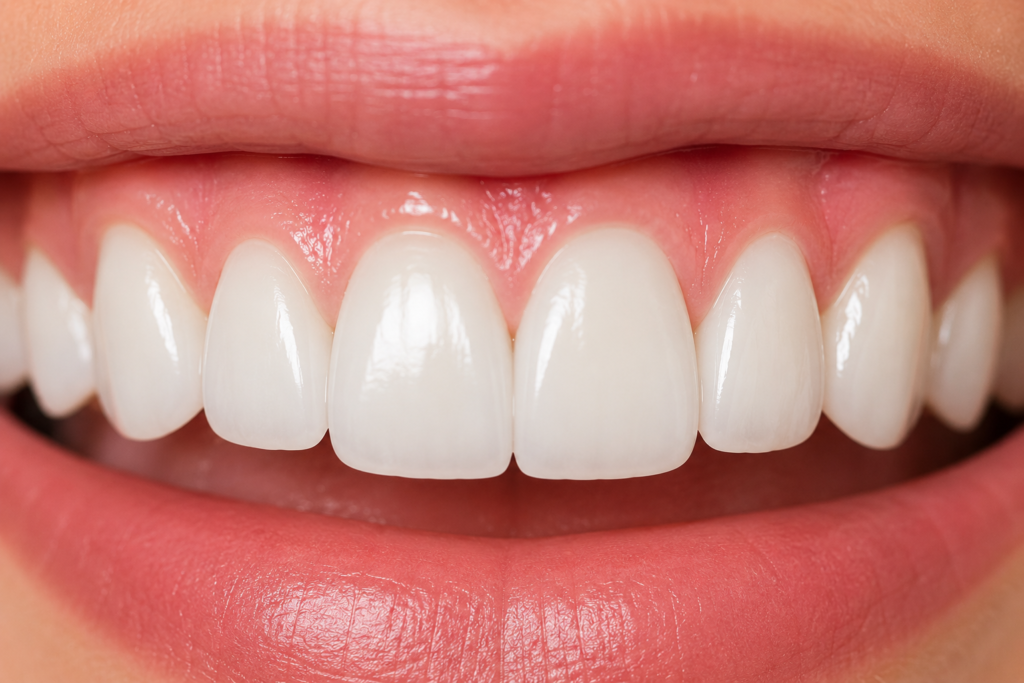
Ceramic perfectly mimics the characteristics of tooth enamel:
- natural translucency;
- elegant shine;
- correct reflection of light;
- a fine, sophisticated texture.
The result is a very natural and harmonious smile.
2. They don’t change color
Unlike composite, ceramic does not absorb pigments or stain easily.
Veneers retain their color and luster for many years.
3. Greater strength and durability
Ceramic veneers are much more resistant to:
- wear and tear;
- fractures;
- scratches;
- superficial aging.
With proper care, they can last more than 10 or 15 years.
4. Excellent biocompatibility
Dental ceramics are one of the most biocompatible materials used in modern dentistry, as highlighted by various professional organizations such as the General Council of Dentists of Spain.
Its advantages include:
- stable and inert material;
- absence of synthetic resins;
- excellent gingival tolerance;
- minimal risk of allergies;
- a smooth surface that reduces bacterial buildup.
Thanks to these properties, the gums tend to remain healthier and more stable around ceramic veneers.
Differences Between Composite Veneers and Ceramic Veneers
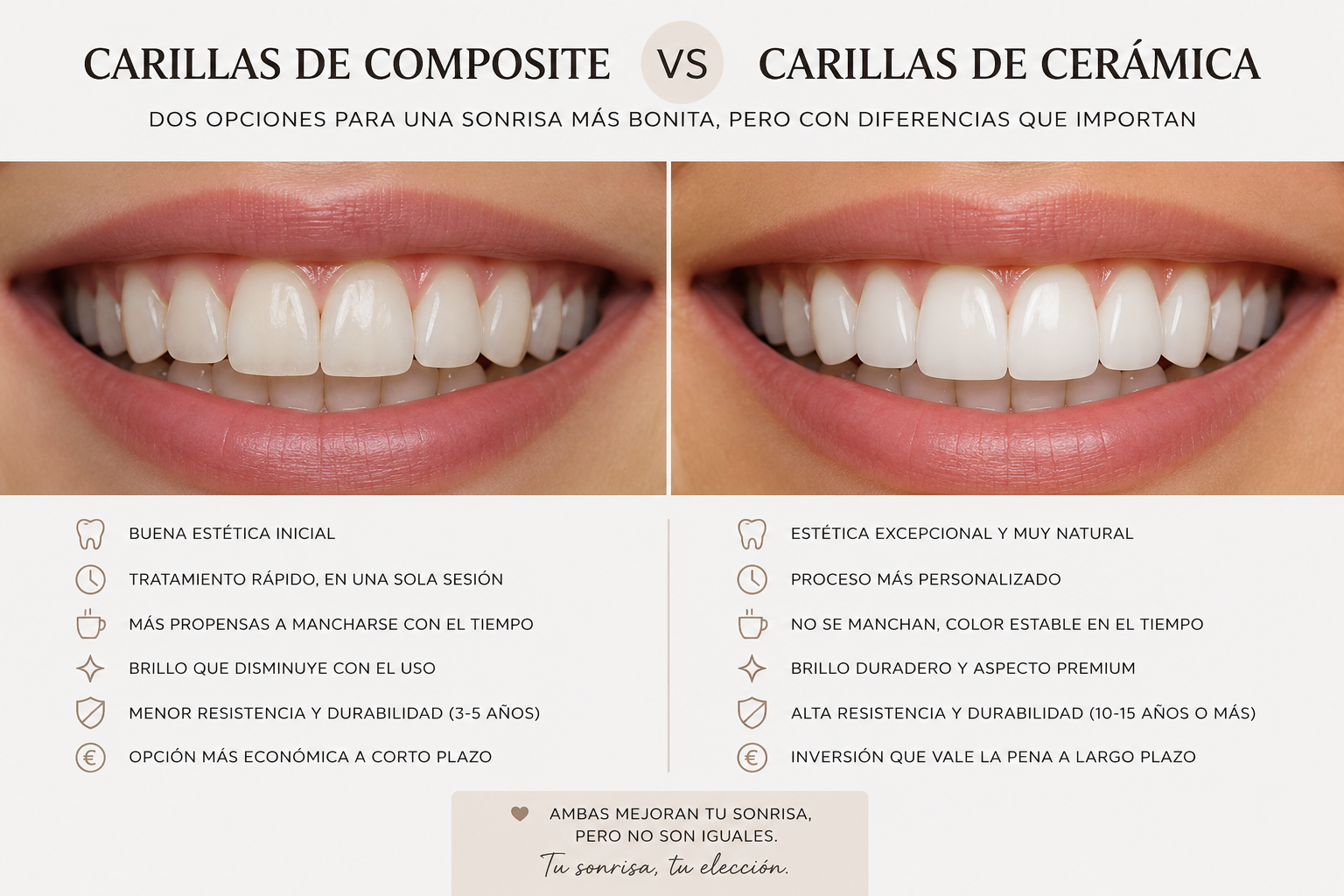
| Feature | Composite | Ceramic |
|---|---|---|
| Aesthetics | Good | Excellent |
| Naturalness | Medium | Very high |
| Stain resistance | Low | Very high |
| Duration | 3–5 years | 10–15 years |
| Luster over time | Decreases | Decreases |
| Resistance | Medium | Very high |
| Biocompatibility | Good | Excellent |
| Gum Health | Average | Very good |
| Long-Term Investment | Limited | Highly profitable |
Why are more and more patients choosing ceramic veneers?
The current trend in cosmetic dentistry focuses on treatments that:
- more natural;
- more durable;
- healthier for the gums;
- and made with premium materials.
That is why ceramic veneers have become the preferred choice for patients who want an elegant, natural-looking smile that will last.
Conclusion

Both composite veneers and ceramic veneers can improve your smile, but the differences become apparent over time.
Composite veneers are a more affordable and quicker option, while ceramic veneers offer superior aesthetics, greater durability, better color stability, and excellent biocompatibility.
If you’re thinking about improving your smile and want to know which option is best for you, we invite you to visit SDS Dental Clinic in Vilafranca del Penedès.
Our team will conduct a personalized assessment of your smile and explain all the options available to achieve a natural, harmonious, and long-lasting result.
The first visit and evaluation are free.
📍 SDS Dental Clinic – Vilafranca del Penedès
📞 676 344 959
Schedule an appointment and find out how we can help you achieve the smile you’ve always wanted.